


Local News
Bench Fire Public Meeting Highlights Progress, Challenges and Commitment to the Warm Springs Community
Jul
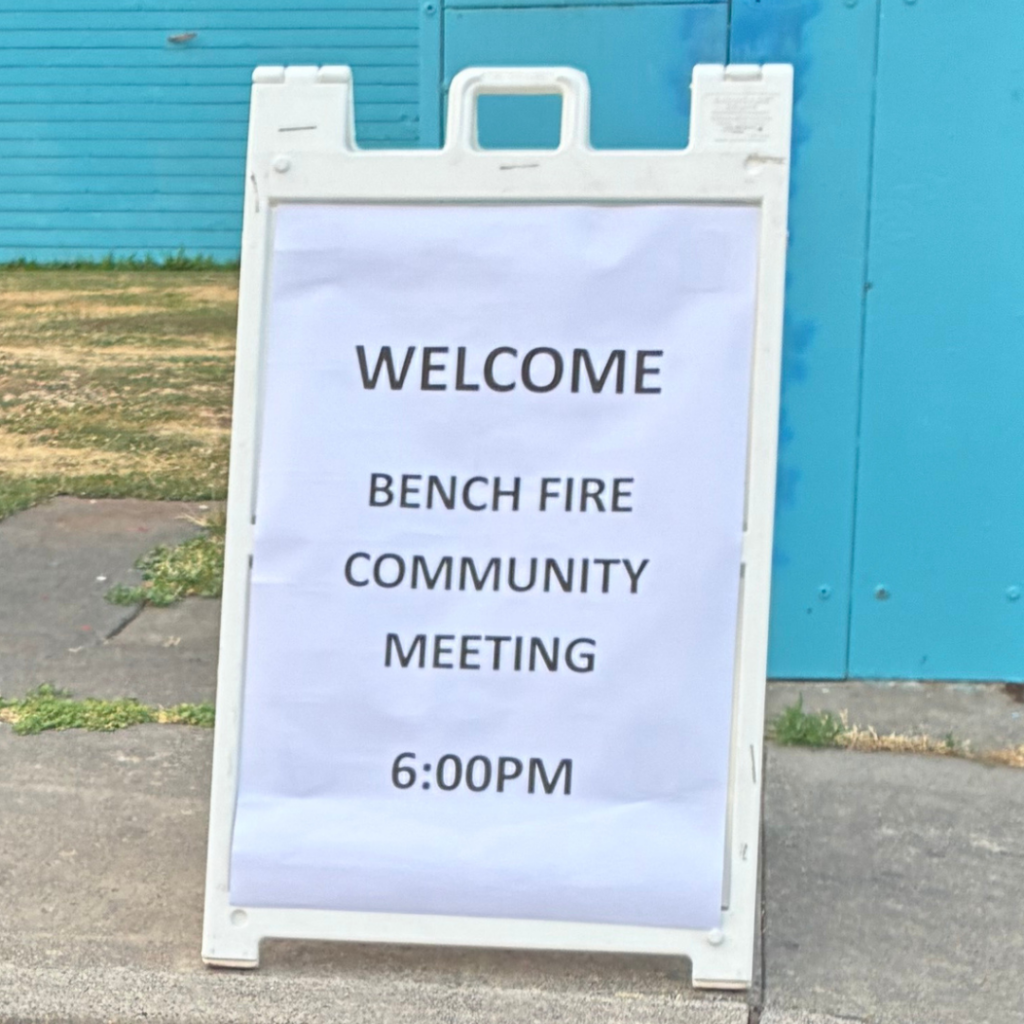
WARM SPRINGS, Ore. – Tribal leaders and wildfire officials told about 100 community members Thursday evening (7/30/26) that while the Bench Fire has brought tremendous loss to the Warm Springs Reservation, hundreds of firefighters are now making significant progress toward protecting homes, infrastructure and tribal lands. The public meeting was also broadcast on KWSO radio and live streamed on the KWSO Facebook Page.
During a public meeting at the Warm Springs Community Center, representatives from the Confederated Tribes of Warm Springs, the Bureau of Indian Affairs, U.S. Wildland Fire Service, Southwest Area Incident Management Team 4 and the Oregon State Fire Marshal outlined the fire’s rapid growth, the response over the past week and what residents can expect moving forward.
Officials described the first days of the fire as some of the most difficult conditions firefighters have faced. Fire Management Officer Trey Leonard said years of drought, only about 11 percent of normal Cascade snowpack and extreme weather created ideal conditions for explosive fire growth. At the time the Bench Fire started on July 23, Oregon and Washington were already at National Preparedness Level 5, the highest level of wildfire activity, with major fires competing for limited firefighting resources.
Leonard said the first fire engine arrived within minutes of the initial report, but the fire had already grown to about five acres. Every available firefighting resource on the reservation was immediately assigned to the incident. Later that evening, the Beachcomb Fire ignited from the same lightning storm, adding to the challenge. Of 12 lightning strikes recorded on the reservation, 11 started fires.
Warm Springs Fire & Safety Chief Scott Spaulding said local firefighters, police and emergency responders quickly coordinated evacuations while requesting mutual aid from neighboring agencies. As state and federal resources arrived, the response expanded into a unified effort focused on protecting lives, homes and critical infrastructure.
Acting Bureau of Indian Affairs Superintendent Cinco Cronemeyer offered a different perspective, sharing teachings from his Navajo heritage. He explained that fire is traditionally regarded as “Grandfather Fire” and “Grandmother Fire,” reminding those attending that while wildfire brings loss, fire is also part of the natural cycle of renewal. He expressed his prayers for the Warm Springs community and encouraged residents to find strength as recovery begins.
Brad Donahue of the U.S. Wildland Fire Service said the Bench Fire initially ranked low on the national priority list because of the many large fires burning across the Northwest. As threats to homes increased, the incident became a higher priority and additional resources were assigned. By Thursday, approximately 800 firefighters were working on the fire, compared with about 140 during the first weekend.
Operations Section Chief William Dudley said crews are now working around the clock with Hotshot crews, hand crews, engines, bulldozers and heavy equipment to strengthen containment lines and mop up hotspots. Progress has been made along the Metolius and Deschutes river corridors, around Three Rivers and near Highway 26, while contingency lines are being prepared should weather conditions change.
Oregon State Fire Marshal Operations Section Chief Steve Chapman said structural firefighters have focused on protecting homes since arriving on Saturday. Crews have used thermal imaging cameras to locate hidden hotspots around surviving structures and continue clearing hazardous areas before residents fully return. Chapman said protecting homes remains the team’s highest priority and acknowledged the emotional impact the fire has had on the community.
Fire Behavior Analyst Jim King explained why the Bench Fire spread so quickly. Strong winds, critically dry vegetation and steep terrain combined to produce flames estimated at 70 to 100 feet high, with embers carried as much as a half-mile ahead of the main fire. Those conditions allowed the fire to cross the Deschutes River and Highway 26 during its most active period. King noted that although approximately 60,000 acres have burned, many areas experienced low- to moderate-intensity fire or remain unburned. He also cautioned that Red Flag weather expected over the weekend could increase fire activity, although firefighters are now in a much stronger position because of the containment work completed over the past week.
Southwest Area Incident Management Team 4 Incident Commander Andrew Mandel praised the work of Warm Springs firefighters and tribal staff, saying their knowledge of the land has been invaluable in developing suppression strategies. He also thanked the community for supporting firefighters, noting those messages are shared with crews during daily briefings.
Oregon State Fire Marshal Incident Commander Ian Yoakam said more than 800 firefighters from tribal, local, state and federal agencies are working together to help the community recover. He pointed to lowered evacuation levels, the reopening of health services and the return of many residents as signs of progress.
While recognizing the homes that have been lost, Yoakam reminded residents of an important measure of success. “No lives were lost,” he said, adding that no firefighters have been killed while battling the Bench Fire. Following the presentations, officials met individually with residents around detailed fire maps to answer questions about specific neighborhoods and ongoing suppression efforts.
You can rewatch the community meeting on KWSO’s Facebook Page (https://www.facebook.com/share/v/1JDXCoahS4/) and you can listen to just the audio HERE

